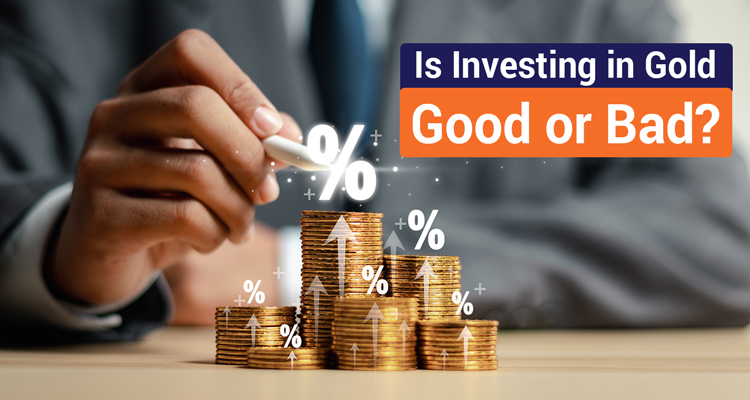
For thousands of years, gold has held a unique place in human history. It has been used as money, a store of value, and a symbol of wealth across cultures and civilizations. Even in the modern financial world—dominated by stocks, bonds, and digital assets—gold continues to attract investors looking for stability.
But is gold really a solid investment? The answer depends on how and why it is used. This article explores the role of gold in a balanced financial strategy, its strengths, its limitations, and why it continues to matter in uncertain times.
Why Gold Has Endured Over Time
Gold’s appeal is not accidental. Its physical and economic characteristics have allowed it to survive every major financial system in history.
Scarcity and Durability
Gold is scarce, difficult to extract, and does not corrode or degrade. These qualities make it well-suited as a long-term store of value.
Universal Acceptance
Unlike currencies, which depend on governments and policies, gold is recognized globally. It does not rely on the promise of repayment from any institution.
Gold as a Store of Value
One of gold’s most important roles is preserving purchasing power.
Protection Against Inflation
Over long periods, gold has often maintained its value as currencies lose purchasing power due to inflation. While it may fluctuate in the short term, its long-term role as a hedge remains relevant.
Currency Risk Diversification
When confidence in paper currencies weakens, gold often attracts increased interest. This makes it useful as a hedge against currency devaluation.
Gold in Times of Economic Uncertainty
Gold tends to perform differently from traditional financial assets.
A Safe-Haven Asset
During periods of:
- Economic instability
- Financial crises
- Geopolitical tension
investors often turn to gold as a defensive asset.
Psychological Confidence
Gold’s value is reinforced by trust and tradition. In uncertain times, this psychological factor can be powerful.
How Gold Fits Into a Diversified Portfolio
Gold is rarely intended to replace other investments.
Diversification Benefits
Because gold often moves independently of stocks and bonds, it can:
- Reduce overall portfolio volatility
- Provide balance during market downturns
Diversification is about managing risk, not eliminating it.
Allocation Matters
Most financial strategies suggest holding gold as a portion of a portfolio rather than a dominant position. The right allocation depends on individual goals and risk tolerance.
Different Ways to Invest in Gold
Gold can be accessed through several methods, each with unique considerations.
Physical Gold
This includes gold bars, coins, and jewelry.
Advantages:
- Tangible asset
- No counterparty risk
Considerations:
- Storage and security
- Insurance costs
- Liquidity challenges
Gold ETFs and Funds
Exchange-traded funds allow exposure to gold prices without physical ownership.
Advantages:
- Easy to buy and sell
- Lower storage concerns
Considerations:
- Management fees
- Dependence on financial systems
Gold Mining Stocks
These represent companies involved in gold production.
Advantages:
- Potential for growth beyond gold prices
- Dividend opportunities
Considerations:
- Business and operational risks
- Correlation with broader stock markets
Digital and Paper Gold
Some investors use digital gold platforms or certificates.
Advantages:
- Convenience
- Accessibility
Considerations:
- Counterparty risk
- Regulatory differences
Gold Is Not a Growth Asset
It is important to understand what gold is—and what it is not.
Limited Income Generation
Gold does not produce:
- Dividends
- Interest
- Cash flow
Returns depend primarily on price appreciation.
Long Periods of Flat Performance
Gold can experience extended periods where prices move sideways. Patience is required.
Comparing Gold to Stocks and Bonds
Gold plays a different role than traditional investments.
Stocks
Stocks offer growth and income potential but come with volatility.
Bonds
Bonds provide income and stability but are sensitive to interest rates and inflation.
Gold
Gold focuses on preservation and diversification rather than income or growth.
Each asset serves a different purpose.

Emotional and Behavioral Factors
Gold often appeals to investor psychology.
Fear and Confidence Cycles
Interest in gold tends to rise when fear increases and decline during periods of optimism.
Avoiding Emotional Overexposure
Buying gold out of panic or selling during calm periods can lead to poor timing decisions.
Long-Term Perspective on Gold
Gold’s true strength shows over long time horizons.
Protection, Not Prediction
Gold is not about predicting market crashes. It is about being prepared for uncertainty.
Consistency Over Speculation
Using gold consistently as part of a strategy is more effective than trading it frequently.
Common Myths About Gold
Myth: Gold Always Goes Up
Gold prices fluctuate and can decline for long periods.
Myth: Gold Replaces All Other Investments
Gold complements other assets; it does not replace them.
Myth: Physical Gold Is Always Better
The best form depends on individual goals, costs, and access.
When Gold Makes Sense
Gold may be especially useful for:
- Long-term investors seeking stability
- Those concerned about inflation or currency risk
- Portfolios heavily exposed to equities
It may be less suitable for those seeking income or rapid growth.
Risks to Consider
Even solid investments carry risks.
Price Volatility
Gold prices can be influenced by:
- Interest rates
- Currency movements
- Market sentiment
Opportunity Cost
Capital invested in gold is not invested elsewhere. Balance is key.
Final Thoughts
Gold has earned its reputation as a solid investment through centuries of economic change. Its strength lies not in rapid growth, but in stability, diversification, and long-term value preservation.
For investors who understand its role and limitations, gold can be a valuable part of a balanced financial strategy. It is not a shortcut to wealth, but a tool for resilience.
In a world where markets evolve and uncertainty is constant, gold continues to serve as a quiet reminder that some principles of value never truly disappear.
Summary:
Since gold cannot be made or printed at the whim of greedy politicos, it can’t be devalued as quickly as the paper money that is printed whenever need arises.
Keywords:
Gold: A Solid Investment
Article Body:
Make no mistake, the currency crisis is coming.
Rather than sitting back and letting it happen, protect yourself and profit from an economic upset that could basically render your dollars about as worthless as the paper they’re printed on.
We saw a preview of this kind of debacle quite recently. In early 2006 a currency plunge triggered an avalanche of sell orders in emerging markets from Brazil to Indonesia. The Icelandic krona plunged nearly 10 percent in only two days, dragging down Icelandic stocks and bonds with it and subsequently spread to Brazil, Mexico, Poland and Turkey.
A precursor to this was the Asian Currency Crash of 1997, which sent stocks south like ducks in winter. Banks, insurance companies, real estate and bonds also fled the scene. The only viable option left was gold.
In the event of another such decline in currency values, gold will be worth at least 10 times its current value.
How is this possible?
Simple: Since gold cannot be made or printed at the whim of greedy politicos, it can’t be devalued as quickly as the paper money that is printed whenever need arises.
When a currency is backed by gold, $1 in paper money has to be backed by approximately one dollar’s worth of gold. Once a currency is no longer backed by gold, governments can print as much as needed. Naturally, most world governments have gone off the gold standard and that is why paper money has no intrinsic value.
As a result, most major institutions only speculate short term between those currencies and associated local values, such as stocks or bonds, and then they convert their profit into gold.
This is where we at Forex Super King excel. We specialize in global trading and diversification.
Our money is made in both currency trading, where we average 1,000 pips (price interest points) per month, and U.S. small stocks that recently acquired dual listings with the European exchange.
As a result, our clients can experience a short-term windfall from 50 percent to 400 percent by tapping into the heavy buying power of European investors with holding time from a day to a month. We then convert half of our profit every month into gold.
We’ll show you how to get set up so that you can hold your funds in several currencies, even if you only have $500 to start.
We can also show you how to not only diversify internationally but how to trade the international markets as well as currency markets to realize substantial profit, short term.




Leave a Reply